

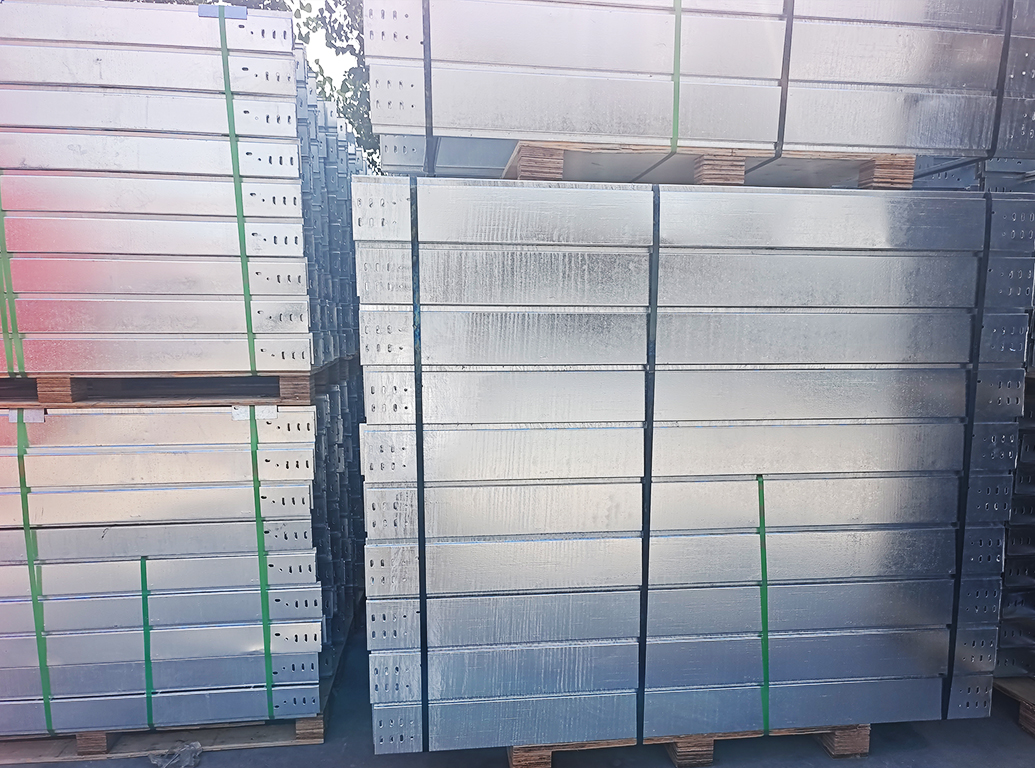
In modern building mechanical and electrical engineering, cable management plays a critical role in safety, maintenance, system reliability, and project efficiency.
Among the most widely used cable support products, Xinning cable tray is often associated with practical, standardized, and cost-effective cable routing solutions for commercial buildings, industrial facilities, infrastructure projects, data centers, and utility systems.
More broadly, cable trays, cable ladders, wire mesh trays, and cable support accessories form a complete cable support system that helps organize power cables, control cables, communication cables, and instrumentation lines.
This page provides a clear and SEO-friendly introduction to common cable support products for building mechanical and electrical projects.
The content below is written for direct use in blog posts, category pages, landing pages, product directories, and industry knowledge pages.
It focuses on general industry information only, including definitions, advantages, common materials, specifications, selection factors, application scenarios, and comparison tables.
No specific company recommendation is included.
A cable tray system is a structural support system used to carry and protect electrical cables and related wiring in buildings and industrial environments.
Instead of placing cables directly inside walls or random conduits, a cable tray provides an organized pathway that improves accessibility, installation efficiency, and future maintenance.
Cable tray systems are commonly used in mechanical and electrical projects where large numbers of cables must be routed over long distances or in complex layouts.
In general, cable tray systems are designed to:
Building mechanical and electrical projects require careful planning because cable networks often interact with lighting systems, HVAC equipment, fire alarm systems, control systems, power distribution, and weak current systems.
Cable support products make it possible to install these lines in a safe, structured, and scalable way.
The value of cable support products is especially clear in large projects such as office towers, hospitals, shopping centers, factories, airports, tunnels, rail stations, and warehouses.
In these environments, cable routing must be reliable, easy to inspect, and capable of handling future upgrades.
The following are the most common cable support products used in building MEP projects.
Each product type has different structural characteristics and application advantages.
| Product Type | Main Function | Typical Applications | Key Benefits |
|---|---|---|---|
| Cable Tray | Supports multiple cables along a horizontal or vertical route | Buildings, factories, utilities, commercial projects | Flexible routing, easy maintenance, wide compatibility |
| Cable Ladder | Provides strong support for heavy cable loads | Industrial plants, power systems, large MEP projects | High load capacity, good ventilation, long-span support |
| Wire Mesh Tray | Lightweight support for small and medium cable bundles | Data centers, office buildings, IT rooms | Easy installation, good airflow, neat appearance |
| Perforated cable tray | Supports cables while allowing partial ventilation | Commercial buildings, control rooms, plant areas | Balanced strength and cost, simple structure |
| Solid Bottom Tray | Provides full bottom support for sensitive cables | Instrumentation, communication, clean environments | Better cable protection, reduced external exposure |
| Cable Duct / Trunking | Encloses cables in a protective channel | Indoor electrical systems, office wiring | Clean appearance, dust protection, compact installation |
In industry searches, the term Xinning cable tray is often used as a cable tray keyword associated with cable management products and cable support systems.
For SEO and product information purposes, it can be understood as part of the broader cable tray market and cable support product category.
The most important point is not the brand name itself, but the product type, structural performance, coating option, load capacity, and project suitability.
When users search for cable tray information, they usually want to understand:
Cable tray systems offer several practical advantages in building and industrial electrical installations.
These benefits explain why cable tray remains one of the most widely adopted cable support solutions worldwide.
Cable trays help separate and organize different categories of cables, such as power cables, control cables, signal cables, and communication lines.
This improves clarity and reduces the risk of installation confusion.
Unlike fully concealed wiring systems, cable trays allow cables to be inspected, replaced, or expanded with less effort.
This is especially useful in projects that need future upgrades or frequent maintenance.
Properly designed cable trays reduce cable stress, avoid random cable stacking, and help maintain safe routing distances.
They also support orderly installation in locations where fire safety and access control are important.
Cable tray systems can save installation time because they are modular and relatively easy to assemble.
This helps contractors improve project efficiency and reduce labor cost.
Cable support products can be used indoors or outdoors, in dry or humid areas, and in light-duty or heavy-duty projects, depending on material and surface treatment.
Different materials are selected based on the project environment, corrosion level, loading requirement, and budget.
The most common materials include galvanized steel, stainless steel, aluminum, and fiberglass-reinforced plastic.
| Material | Typical Characteristics | Best For | Main Advantage |
|---|---|---|---|
| Pre-galvanized Steel | Economical, common, good general performance | Indoor buildings, standard commercial projects | Cost-effective and easy to source |
| Hot-Dip Galvanized Steel | Thicker zinc coating, better corrosion resistance | Outdoor areas, humid environments, industrial projects | Strong protection against rust |
| Stainless Steel | Excellent corrosion resistance, premium appearance | Food plants, coastal projects, clean rooms | Durability and long service life |
| Aluminum | Lightweight, easy to handle, corrosion resistant | Data centers, lightweight structures, rooftop systems | Low weight and convenient installation |
| FRP / Fiberglass | Non-metallic, non-conductive, chemical resistant | Chemical plants, corrosive environments | High resistance to chemicals and moisture |
Different cable tray types are designed for different cable loads and installation conditions.
Selecting the right type is essential for safety, cost control, and long-term performance.
Ladder cable tray is one of the strongest and most popular options for heavy-duty electrical installations.
It consists of two side rails connected by rungs, creating a structure similar to a ladder.
This design provides strong support and excellent ventilation for power cables.
A perforated tray has holes or slots in the bottom panel.
It offers a combination of mechanical support and airflow, making it suitable for general building projects and control cable routing.
Wire mesh cable tray is lightweight and flexible, often used in low-voltage systems, IT infrastructure, and data centers.
It is easy to cut, bend, and install.
Solid bottom trays offer full support and are commonly used where cable protection is important.
They can help reduce dust accumulation and external interference.
Trough cable tray has side walls and a partially ventilated bottom, providing a balance between protection and heat dissipation.
The following table shows common cable tray specification ranges used in building mechanical and electrical projects.
Exact dimensions can vary depending on design standards and project requirements.
| Specification Item | Common Range | Notes |
|---|---|---|
| Tray Width | 50 mm to 1000 mm | Chosen based on cable quantity and future expansion |
| Side Rail Height | 25 mm to 200 mm | Higher side rails improve load capacity and retention |
| Length per Section | 2000 mm to 3000 mm | Standard lengths support efficient installation |
| Thickness | 1.0 mm to 3.0 mm or more | Depends on loading and material type |
| Load Capacity | Light, medium, heavy duty | Should be calculated according to cable weight and span |
| Span Length | 1.5 m to 3.0 m typical | Longer spans require stronger structure and support planning |
Choosing the right cable tray depends on project requirements, installation environment, cable type, and budget.
A good selection process can prevent later maintenance problems and reduce overall lifecycle cost.
Cable trays and related support products are used in almost every type of electrical and mechanical project.
The following are common application scenarios:
| Application Scenario | Recommended Product Type | Reason |
|---|---|---|
| Office Buildings | Perforated tray, wire mesh tray | Neat installation, easy maintenance, moderate cable load |
| Industrial Plants | Ladder tray, hot-dip galvanized tray | Heavy-duty support and corrosion resistance |
| Data Centers | Wire mesh tray, aluminum tray | Lightweight, flexible, clean cable routing |
| Hospitals | Perforated tray, stainless steel tray | Reliability, hygiene, and controlled cable layout |
| Outdoor Utility Projects | Hot-dip galvanized ladder tray, stainless steel tray | Better weather and corrosion resistance |
| Chemical Facilities | FRP tray, stainless steel tray | Resistance to corrosive substances |
A complete cable support system includes not only the tray body but also accessories that ensure proper routing, fixing, turning, branching, and connection.
These components are necessary for a professional installation.
Proper installation is just as important as product selection.
Even a High-quality cable tray system can perform poorly if installation is not done according to engineering requirements.
Key installation considerations include:
Many project owners compare these three products before deciding on a cable support solution.
The best choice depends on cable volume, installation environment, and load requirements.
| Feature | Cable Tray | Cable Ladder | Wire Mesh Tray |
|---|---|---|---|
| Load Capacity | Medium to heavy | Heavy | Light to medium |
| Ventilation | Good | Excellent | Excellent |
| Installation Speed | Fast | Fast | Very fast |
| Best Use | General building and industrial systems | Heavy-duty power routing | Lightweight and flexible cable layouts |
| Appearance | Clean and structured | Industrial and strong | Minimal and tidy |
The cable support industry continues to evolve with changing project demands.
Modern buildings require better cable organization, faster installation, improved corrosion resistance, and higher flexibility for future system expansion.
Current trends include:
The main purpose of a cable tray is to support, route, and organize electrical and communication cables in a safe and accessible way.
Yes, cable trays can be used outdoors if the correct material and surface treatment are selected, such as hot-dip galvanized steel or stainless steel.
Ladder cable tray is usually the best choice for heavy cables because it offers strong support and excellent ventilation.
Yes, wire mesh tray and Aluminum cable tray are common choices in data centers because they are lightweight, neat, and easy to modify.
Cable tray systems generally require low maintenance, but regular inspection is recommended to check support stability, corrosion condition, and cable arrangement.
Cable support products are essential components in building mechanical and electrical projects.
Whether the project requires a general-purpose cable tray, a heavy-duty ladder system, a lightweight wire mesh solution, or a protective solid-bottom design, the right selection can significantly improve installation quality, safety, and long-term service performance.
For SEO content, category pages, and industry knowledge articles, the keyword Xinning cable tray can be naturally associated with the broader cable tray and cable support product market.
By focusing on product type, material, size, load capacity, installation method, and application scenario, you can create strong search-friendly content that is useful for engineers, contractors, procurement teams, distributors, and project planners.
```


Copyright © 2026 Hebei Xinnin Metal Products Co., Ltd
Mapa del sitioEste sitio web utiliza cookies para garantizar que obtenga la mejor experiencia en nuestro sitio web.
 English
 한국어
 العربية
 ไทย



 Teléfono
Comentario
(0)