

Choosing the right cable tray material is one of the most important decisions in electrical
infrastructure design. A properly selected cable tray system improves cable organization,
supports long-term performance, reduces maintenance costs, and helps ensure safety in demanding installations.
For projects in industrial plants, commercial buildings, data centers, power stations, oil and gas facilities,
marine environments, and outdoor utility systems, the environment directly affects tray durability, corrosion
resistance, mechanical strength, and service life.
This guide provides a complete, SEO-friendly overview of cable tray material selection for
different environments. It covers definitions, key advantages, common material types, environmental factors,
product selection criteria, performance comparisons, and practical specification tables. The content is designed
for use in blogs, category pages, industry pages, and product support pages. It contains only general industry
information and does not include any specific company recommendation.
A cable tray is a structural support system used to route and organize electrical cables,
communication cables, control wiring, and instrumentation lines. Unlike conduit systems that enclose each cable,
a cable tray provides open or semi-open support, allowing easier installation, expansion, inspection, and future
maintenance. Cable trays are widely used where multiple cables must be routed efficiently across long distances,
through ceilings, walls, floors, machinery zones, and outdoor routes.
The right cable tray material must match the installation environment. Indoor dry areas may allow more material
flexibility, while corrosive, humid, high-temperature, or UV-exposed locations demand stronger protection. The
most common cable tray materials include pre-galvanized steel, hot-dip galvanized steel,
stainless steel, aluminum, fiberglass reinforced plastic (FRP),
and in some cases powder-coated steel.
Cable tray material selection affects nearly every aspect of system performance. The wrong material can lead to
corrosion, deformation, excessive weight, poor load support, safety hazards, and frequent replacement. The right
material helps maximize performance in the exact operating environment.
The cable tray market offers several material options, each with distinct benefits and limitations. Understanding
these differences is essential for selecting the best tray type for a project environment.
Pre-galvanized steel, also called mill-galvanized steel, is one of the most economical cable tray materials.
It is typically coated before fabrication and offers moderate corrosion resistance for dry indoor environments.
This material is often used in commercial buildings, office complexes, warehouses, and general utility areas.
Hot-dip galvanized steel cable tray is coated after fabrication by immersing the finished product into molten zinc.
This creates a thick, durable protective layer. It is one of the most popular choices for industrial applications
because it provides stronger corrosion protection than pre-galvanized steel.
Stainless steel cable tray provides excellent corrosion resistance and is commonly used in harsh environments.
It performs very well where exposure to moisture, salt, chemicals, or strict hygiene requirements exists.
Common grades include 304 and 316 stainless steel, with 316 generally offering better resistance to chlorides.
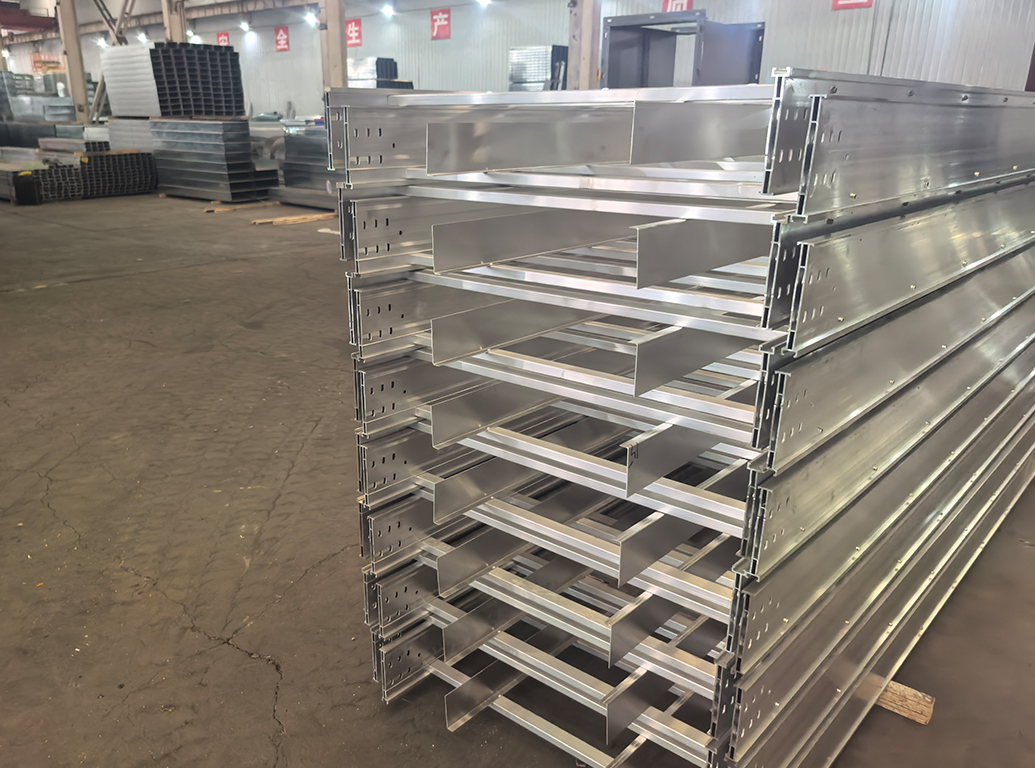
Aluminum cable tray is valued for its low weight, good corrosion resistance, and ease of installation. It is ideal
when structural load reduction is important. Aluminum is widely used in commercial buildings, data centers, and
outdoor systems where lightweight support and reliable performance are required.
FRP cable tray, also known as fiberglass cable tray, is designed for highly corrosive environments. It offers
excellent resistance to chemicals, moisture, and salt exposure. FRP is non-metallic, lightweight, and often used
in petrochemical, wastewater, offshore, and chemical processing facilities.
Powder-coated steel cable tray uses a protective polymer finish applied over steel. This improves appearance and
can add extra protection in indoor environments. It is commonly chosen for architectural projects or controlled
indoor spaces where design and color consistency are important.
A successful cable tray specification begins with a clear understanding of the environment. Even the best-designed
tray will fail early if it is installed in conditions beyond its material limits.
| Environmental Factor | Impact on Cable Tray Selection | Common Material Preference |
|---|---|---|
| Humidity | Increases corrosion risk and coating degradation | Hot-dip galvanized steel, aluminum, stainless steel |
| Salt exposure | Accelerates rust and surface corrosion | Stainless steel 316, aluminum, FRP |
| Chemical exposure | Can damage coatings and reduce structural life | FRP, stainless steel 316 |
| High temperature | May affect coating stability and material strength | Steel, stainless steel, selected aluminum systems |
| UV exposure | Can age non-metallic materials and coatings | UV-stabilized FRP, stainless steel, aluminum |
| Heavy load | Requires higher mechanical strength and span performance | Hot-dip galvanized steel, stainless steel |
| Cleanroom or hygiene control | Needs corrosion resistance and easy-clean surfaces | Stainless steel, aluminum |
Dry indoor environments include office buildings, retail centers, indoor warehouses, and utility corridors with
low humidity and limited corrosive exposure. In these settings, cost efficiency is often a major factor.
Recommended materials: pre-galvanized steel, powder-coated steel, aluminum.
For dry indoor use, the main goal is practical cable management at a reasonable cost. Pre-galvanized steel is
commonly selected because it offers a balance of affordability and basic corrosion protection. Powder-coated steel
may also be used where visual appearance matters.
Humid spaces include basements, laundry areas, utility plants, cooling systems, and buildings in tropical climates.
Moisture creates corrosion pressure on unprotected steel and can shorten service life.
Recommended materials: hot-dip galvanized steel, aluminum, stainless steel.
Hot-dip Galvanized cable tray is often preferred because it provides strong protection at a moderate cost.
Aluminum is also a strong candidate for humid spaces because it naturally resists corrosion.
Outdoor cable tray systems face sunlight, rain, temperature changes, wind, and sometimes airborne contaminants.
The material must resist long-term weather exposure without significant performance loss.
Recommended materials: hot-dip galvanized steel, aluminum, stainless steel, UV-resistant FRP.
In outdoor installations, the choice often depends on load requirements and corrosion severity. Where structural
strength is critical, galvanized steel may be the preferred option. Where weight reduction is important, aluminum
is often ideal. In coastal or highly corrosive outdoor environments, stainless steel or FRP may be the better choice.
Coastal zones and marine facilities are among the harshest environments for cable tray systems. Salt-laden air,
moisture, and chloride exposure create a high corrosion risk.
Recommended materials: stainless steel 316, aluminum, FRP.
Stainless steel 316 is widely recognized for its superior resistance to salt corrosion. Aluminum also performs
well in many coastal conditions, while FRP may be selected for especially aggressive exposure or non-metallic
requirements.
Chemical plants, refineries, and process facilities may expose cable trays to acids, alkalis, solvents, vapors, and
corrosive emissions. This makes material compatibility a critical design concern.
Recommended materials: FRP, stainless steel 316, specialized coated systems.
FRP is often the preferred solution when the environment contains aggressive chemicals. Stainless steel is also
used where mechanical strength and corrosion resistance must work together. Material selection should be verified
against the exact chemical exposure profile of the facility.
Data centers require organized, accessible, and reliable cable management. The main priorities are clean routing,
low maintenance, and structural reliability. Air-conditioned indoor spaces reduce corrosion risk, but fire safety
and installation efficiency remain important.
Recommended materials: aluminum, pre-galvanized steel, powder-coated steel, stainless steel in special cases.
Aluminum is often favored for its light weight and easy installation. Pre-galvanized steel may be used where cost
control is important. Stainless steel may be selected for specialized rooms requiring stronger protection or strict
environmental control.
Food and beverage plants, pharmaceutical production areas, and clean processing environments often require easy
cleaning and resistance to moisture and cleaning chemicals.
Recommended materials: stainless steel, aluminum, selected FRP systems.
Stainless steel offers strong hygiene performance and a smooth, cleanable surface. Aluminum can also be used where
chemical exposure is moderate and weight reduction is important.
Underground cable tray systems are often exposed to moisture, limited ventilation, condensate, and long-term
maintenance challenges. The tray material must resist corrosion while maintaining durability over time.
Recommended materials: hot-dip galvanized steel, stainless steel, FRP.
If water ingress, dampness, or chemical seepage is expected, a more corrosion-resistant material should be used.
In difficult underground conditions, FRP or stainless steel can help extend service life.
| Material | Corrosion Resistance | Strength | Weight | Cost Level | Typical Use |
|---|---|---|---|---|---|
| Pre-galvanized steel | Moderate | High | Medium | Low | Dry indoor environments |
| Hot-dip galvanized steel | Good | High | Medium to high | Medium | Industrial and outdoor applications |
| Stainless steel | Excellent | High | Medium to high | High | Coastal, chemical, hygiene-critical areas |
| Aluminum | Good to very good | Moderate to high | Low | Medium to high | Lightweight indoor/outdoor systems |
| FRP | Excellent | Moderate | Low | Medium to high | Chemical and corrosive environments |
| Powder-coated steel | Moderate | High | Medium | Low to medium | Indoor visible installations |
Selecting the best cable tray material requires balancing environmental demands, project budget, structural
requirements, and maintenance expectations. The following steps can help guide the decision.
Cable tray material selection also depends on tray style. The material must work well with the tray form and load
requirements.
| Cable Tray Type | Typical Material Options | Main Advantage |
|---|---|---|
| Perforated cable tray | Steel, aluminum, stainless steel | Good support and ventilation |
| Ladder cable tray | Hot-dip galvanized steel, aluminum, stainless steel | High load capacity and easy cable routing |
| Wire mesh cable tray | Steel, stainless steel | Lightweight and flexible installation |
| Solid bottom cable tray | Steel, aluminum, FRP | Better cable protection from debris and dust |
| Channel cable tray | Steel, aluminum | Compact support for small cable runs |
Proper cable tray material selection delivers measurable benefits across safety, performance, and project value.
The following table provides a general specification reference for cable tray material selection. Actual values vary
by design, thickness, coating system, tray type, and manufacturer engineering standards.
| Specification Item | Typical Considerations |
|---|---|
| Material thickness | Selected based on load requirements and span distance |
| Surface finish | Galvanized, stainless, powder-coated, or composite finish |
| Load rating | Determined by cable weight and support spacing |
| Span length | Depends on tray design and material stiffness |
| Corrosion class | Matched to indoor, outdoor, marine, or chemical exposure |
| Temperature range | Must suit ambient and operating conditions |
| Fire performance | Evaluated according to project and regulatory requirements |
| Installation method | Wall-mounted, ceiling-hung, floor-supported, or rack-mounted |
This guide naturally covers key search phrases related to cable tray systems and material selection. Common
keywords include:
For outdoor use, hot-dip galvanized steel, aluminum, and stainless steel are common choices. The best option
depends on weather exposure, corrosion risk, and cable load.
FRP and stainless steel are often preferred for corrosive environments because they provide strong resistance to
moisture, chemicals, and salt exposure.
Aluminum cable tray can be suitable for industrial use where moderate loads and corrosion resistance are required.
For heavier loads, steel may be more appropriate.
Stainless steel cable tray is chosen for excellent corrosion resistance, long service life, and strong
performance in harsh or hygienic environments.
Cable tray material selection is a core part of electrical system design. The best cable tray material
depends on the environment, cable load, corrosion exposure, temperature, and maintenance expectations. Pre-galvanized
steel works well in dry indoor areas. Hot-dip galvanized steel performs well in general industrial and outdoor
settings. Stainless steel excels in coastal, chemical, and hygienic environments. Aluminum offers lightweight
corrosion resistance, while FRP is highly effective in aggressive corrosive conditions.
By matching the cable tray system to the environment, project owners and engineers can improve reliability,
reduce lifecycle cost, and achieve safer and more efficient cable management. Whether the application is a
commercial building, industrial plant, data center, or corrosive process facility, selecting the right material is
the foundation of a successful cable tray installation.
```


Copyright © 2026 Hebei Xinnin Metal Products Co., Ltd
Mapa del sitioEste sitio web utiliza cookies para garantizar que obtenga la mejor experiencia en nuestro sitio web.
 English
 한국어
한국어 العربية
 ไทย
ไทย



 Teléfono
Comentario
(0)