
 English
 한국어
한국어 العربية
 ไทย
ไทย
Cable tray connection fixing specifications
Here is a 500-word English description of cable tray connection fixing specifications without any company names:--- Cable Tray Connection Fixing SpecificationsCable tray connection fixing is an important part of the installation process, as it ensures the stability, safety, and long-term performance of the cable support system. Proper fixing methods help maintain alignment, reduce vibration, and prevent mechanical stress on cables and tray components. All connections should be completed in accordance with project drawings, applicable electrical standards, and site installation requirements. 1. General RequirementsBefore installation, all cable tray sections, fittings, and accessories should be inspected to ensure they are free from deformation, corrosion, burrs, or other defects. The tray system must be installed on a level and secure support structure. Connection points should be clean and properly aligned before fastening. Any damaged coating should be repaired to prevent corrosion. 2. Connection MethodCable tray sections should be joined using approved splice plates, connectors, or coupling accessories designed for the specific tray type. The connection should be made so that the tray sections are in firm contact and the alignment is maintained along the full route. Bolts, nuts, and washers should be tightened evenly to achieve a secure joint. Over-tightening must be avoided, as it may damage the tray or reduce the effectiveness of the fixing.For ladder-type, perforated, or solid-bottom trays, the connection fixing method should ensure both structural strength and electrical continuity where required. If the tray system is used as part of the grounding path, bonding jumpers or conductive connection elements should be installed in accordance with the design requirements. 3. Fixing Spacing and SupportCable trays must be supported at regular intervals according to the tray size, load capacity, and manufacturer recommendations. Additional supports should be provided near bends, tees, risers, and heavy cable loading areas. Connection points should not be placed in unsupported spans whenever possible, as this may increase stress on the joint. The fixing brackets and hangers must be strong enough to carry the total tray load, including cables, fittings, and future expansion allowance. 4. Fastener RequirementsFasteners used for tray connections should be corrosion-resistant and suitable for the installation environment. In outdoor, humid, or chemical environments, stainless steel or treated fasteners are recommended. All fastening hardware should be installed with the correct size and grade. Missing or loose fasteners are not permitted. Lock washers, spring washers, or other anti-loosening devices may be used where vibration is expected. 5. Alignment and ExpansionTray sections should be aligned horizontally and vertically to avoid twisting or uneven load distribution. Expansion joints should be installed where temperature changes may cause tray movement. These joints must be fixed according to the specified gap and movement allowance. Rigidly locking sections that require expansion accommodation should be avoided. 6. Inspection and TestingAfter installation, all connections should be checked for tightness, alignment, and mechanical stability. The tray system should be inspected to confirm that all fixing points are complete and that no sharp edges or protruding bolts can damage cables. If grounding continuity is required, continuity testing should be carried out across all connected sections. 7. Safety and Quality ControlInstallation work should be performed by trained personnel using proper tools and safety equipment. Quality control checks should be carried out during and after installation to ensure compliance with technical specifications. Any defects found during inspection should be corrected before cable laying begins.---If you want, I can also provide:1. a more technical version, 2. a simplified version for construction documents, or 3. a Chinese-English bilingual version.
Producto
Categoría:
-
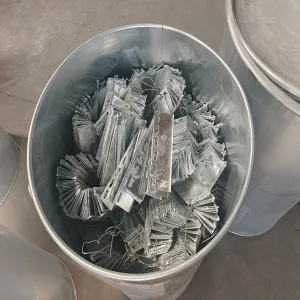
Cable tray connection fixing specifications
Su clasificación: Cable tray connection and fixationVistas: 187Número:Tiempo de liberación: 2026-06-07 18:31:41The connection and fixing accessories of cable trays are produced in accordance with the industry's unified standard specifications. The complete set of accessory specification system is the core parameter basis for ensuring tight splicing, firm fixation, and regular installation of cable trays. Standardized connection specifications, fixed point specifications, and accessory adaptation specifications can accurately match various national standard bridge bodies, avoiding installation failures caused by incompatible specifications and parameter mismatches, and adapting to the unified constr...
Noticias
Categoría:
¡Sin resultados de búsqueda!
Caso
Categoría:
¡Sin resultados de búsqueda!
Video
Categoría:
¡Sin resultados de búsqueda!
Descargar
Categoría:
¡Sin resultados de búsqueda!
Reclutamiento
Categoría:
¡Sin resultados de búsqueda!
Productos recomendados
¡Sin resultados de búsqueda!



 Teléfono