
 English
 한국어
한국어 العربية
 ไทย
ไทย
Characteristics of export specific cable trays
Export-specific cable trays are designed to meet the technical, environmental, and regulatory demands of international markets. Compared with standard domestic products, they must adapt to different installation conditions, transportation requirements, and local compliance standards. The following is a 500-word English description of their main characteristics.Export-specific cable trays are engineered with a focus on durability, flexibility, and compliance with global project requirements. One of their most important characteristics is strong material performance. They are commonly manufactured from high-quality steel, stainless steel, aluminum, or fiberglass-reinforced plastic, depending on the application environment. These materials provide excellent load-bearing capacity, corrosion resistance, and long service life, making the trays suitable for industrial plants, power stations, commercial buildings, and outdoor installations.Another key feature is precise surface treatment. Since export markets often involve humid, coastal, or chemically aggressive environments, cable trays are usually finished with hot-dip galvanizing, pre-galvanizing, powder coating, or epoxy coating. These treatments improve resistance to rust, oxidation, and wear during long-distance transportation and extended use. The surface finish also enhances the appearance of the product, which is important for projects that require both functionality and a clean installation.Export-specific cable trays are also designed to meet international standards and project specifications. They can be manufactured according to IEC, ASTM, BS, or other regional requirements, ensuring compatibility with local engineering practices. Dimensions, thickness, load ratings, and accessory systems are often customized to suit different markets. This flexibility allows the trays to integrate easily with cable management systems used in various countries.Packaging and logistics are another important characteristic. Because export products must travel long distances by sea, air, or land, the trays are packed to prevent deformation, moisture damage, and surface scratches. Strong bundling, protective wrapping, palletization, and container-friendly loading designs are commonly used. Clear labels, part numbers, and installation instructions are included to simplify customs clearance, storage, and on-site assembly.Ease of installation is also a major advantage. Export cable trays are usually manufactured with accurate punching, smooth edges, and standardized connectors to ensure fast and safe installation. Accessories such as bends, reducers, tees, covers, brackets, clamps, and joining plates are often supplied to support complete cable routing systems. This modular design reduces labor time and improves construction efficiency.In addition, export-specific cable trays emphasize safety and reliability. Their structure is carefully tested for mechanical strength, fire resistance, ventilation performance, and electrical continuity where required. The open design allows heat dissipation and easy inspection of cables, while solid or covered types provide extra protection against dust and mechanical damage.In summary, export-specific cable trays combine high-quality materials, protective finishing, international compliance, secure packaging, and easy installation. These characteristics make them suitable for a wide range of overseas projects and ensure stable performance in demanding operating conditions.
Producto
Categoría:
-
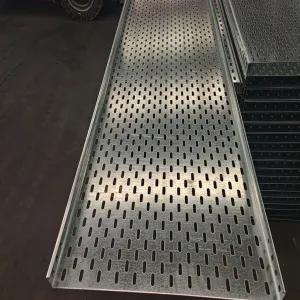
Characteristics of export specific cable trays
Su clasificación: Export specific cable trayVistas: 192Número:Tiempo de liberación: 2026-06-07 17:29:36Export specific cable trays are standardized wiring products designed specifically for cross-border infrastructure, overseas new energy, foreign-related industrial and commercial projects. They differ from the production standards and performance positioning of domestic ordinary trays, and are developed around international construction standards, cross-border transportation conditions, and complex overseas climate conditions. They have three core advantages: high compliance, high weather resistance, and high adaptability, fully meeting the requirements of engineering acceptance and long-term...
Noticias
Categoría:
¡Sin resultados de búsqueda!
Caso
Categoría:
¡Sin resultados de búsqueda!
Video
Categoría:
¡Sin resultados de búsqueda!
Descargar
Categoría:
¡Sin resultados de búsqueda!
Reclutamiento
Categoría:
¡Sin resultados de búsqueda!
Productos recomendados
¡Sin resultados de búsqueda!



 Teléfono