
 English
 한국어
한국어 العربية
 ไทย
ไทย
Commercial cable tray
A commercial cable tray is a structural system designed to support and route electrical and communication cables in non‑residential buildings. It provides a secure, organized pathway for power, control, data, and fiber optic cables, helping engineers and installers manage complex wiring layouts safely and efficiently. Used in offices, shopping centers, hospitals, data centers, industrial facilities, and transport hubs, cable trays are a core element of modern electrical infrastructure.Most commercial cable trays are made from steel, aluminum, or fiberglass-reinforced plastic. Steel trays offer high mechanical strength and are often galvanized or coated for corrosion resistance, making them suitable for demanding indoor and semi‑outdoor environments. Aluminum trays are lighter and easier to handle during installation, while fiberglass options provide excellent resistance to moisture, chemicals, and certain corrosive atmospheres, often used in specialized areas such as laboratories or treatment plants.There are several common types of cable trays. Ladder-type trays consist of two side rails connected by rungs and are widely used where good ventilation and easy cable entry and exit are required. Perforated or ventilated trays have a solid bottom with regular openings, offering a balance between support and airflow. Solid-bottom trays provide maximum protection from dust and falling objects and are often specified for sensitive data or communication cables. Wire mesh or basket trays are lightweight and flexible, ideal for routing smaller cables above suspended ceilings or under raised floors.In commercial settings, cable trays support both safety and maintainability. By elevating cables off the floor and away from walkways, they reduce tripping hazards and the risk of mechanical damage. Proper separation between power and low-voltage circuits within the tray system limits electromagnetic interference and improves system reliability. The open design of many tray types enhances heat dissipation, preventing cable overheating and prolonging insulation life.Installation planning is a critical aspect of a commercial cable tray system. Routes must be coordinated with other building services such as HVAC ducts, plumbing, and fire protection systems. Load calculations determine tray size, material, and support spacing to avoid excessive deflection or structural failure. Accessories such as bends, tees, reducers, covers, and drop-outs enable the tray to follow architectural layouts and connect to equipment, panels, and cabinets. Support structures often include wall brackets, trapeze hangers, and ceiling-mounted rods.Compliance with relevant electrical and building standards is essential. Proper grounding and bonding of metal trays reduce the risk of electric shock and improve fault-clearing performance. Firestopping measures are often applied where trays pass through rated walls or floors to maintain compartmentation. Clear labeling, cable identification, and adequate space for future expansion contribute to long-term maintainability, making the cable tray system an adaptable backbone for evolving commercial electrical and communication needs.
Producto
Categoría:
Cable tray elbow reduction
-
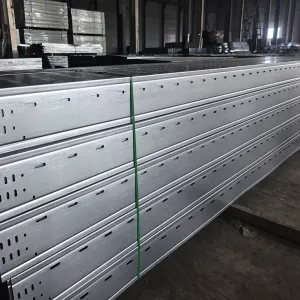
Types of porous cable trays
Su clasificación: Porous cable trayVistas: 191Número:Tiempo de liberación: 2026-06-06 18:53:57The types of porous cable trays on the market are clearly classified according to structural styles, sheet materials, punching processes, and usage scenarios. Different types have different performance advantages and applicable working conditions, which can accurately match the differentiated needs of various strong and weak electrical wiring and intelligent engineering. This facilitates construction parties to select materials according to their needs and carry out precise construction, avoiding engineering problems caused by selection deviations.According to the overall structural form, poro... -

Characteristics of non-standard customized cable trays
Su clasificación: Non standard customized cable trayVistas: 130Número:Tiempo de liberación: 2026-06-07 18:13:51Non standard customized cable trays are specialized wiring products designed for various special, complex, and personalized engineering conditions. Different from the fixed design of universal standard trays, they are centered on adapting to the specific needs of the project, and have core characteristics such as high adaptability, high adhesion, strong compatibility, and specialized working conditions. They perfectly solve various construction pain points such as the limitations of standard tray adaptation, hidden dangers in on-site renovation, and mismatched engineering details, and are suit...
Noticias
Categoría:
-
[Company News]Cable tray is a necessary material for engineering
2026-06-05 16:28:05
Caso
Categoría:
¡Sin resultados de búsqueda!
Video
Categoría:
¡Sin resultados de búsqueda!
Descargar
Categoría:
¡Sin resultados de búsqueda!
Reclutamiento
Categoría:
¡Sin resultados de búsqueda!
Productos recomendados
¡Sin resultados de búsqueda!



 Teléfono