
 English
 한국어
한국어 العربية
 ไทย
ไทย
Export packaging method for fixed components such as connectors
Here is a 500-word English description of an export packaging method for fixed components such as connectors, without any company name:---Export Packaging Method for Fixed Components Such as ConnectorsFixed components such as connectors require careful export packaging to ensure they remain protected during long-distance transportation, handling, storage, and international shipment. Because these components often contain precise structures, contact points, locking features, or surface finishes, the packaging method must prevent deformation, contamination, moisture damage, and mechanical impact. A proper export packaging process helps maintain product quality and ensures that the components arrive at their destination in good condition.The first step in export packaging is product inspection and sorting. Each connector should be checked for appearance, dimensional accuracy, and functionality before packing. Defective items should be removed to avoid quality issues. After inspection, the connectors are usually counted and grouped according to specification, model, and quantity. This helps prevent mixing different types and makes customs inspection, warehouse management, and final assembly more efficient.For primary packaging, connectors should be placed in individual or small-group protective containers. Depending on the product structure, anti-static bags, blister trays, plastic boxes, or partitioned trays can be used. If the connectors have sensitive metal contacts or polished surfaces, soft protective materials such as foam inserts, sponge pads, or molded trays should be added to reduce vibration and surface wear. For products that may be affected by static electricity, anti-static packaging materials are recommended. If moisture sensitivity is a concern, desiccant packets and moisture barrier bags should be included.The next layer is secondary packaging. The primary packages are arranged neatly inside a sturdy inner box or carton. Each carton should be sized appropriately to avoid excessive movement inside. Empty spaces should be filled with cushioning materials such as foam, paper padding, or air bags to prevent the contents from shifting during transit. The carton should be strong enough to withstand stacking pressure and long transportation routes. Corrugated cartons with sufficient compression strength are commonly used for export shipping.For outer packaging, the cartons are typically packed onto pallets for easier handling and better transport safety. Pallets should be made of durable wood or plastic and should comply with international export standards when necessary. The cartons are stacked neatly, wrapped with stretch film, and secured with packing straps to improve stability. Corner protectors may also be used to prevent crushing and deformation. If the shipment requires sea freight or long-term storage, additional moisture-proof wrapping is advised.Labeling is also an important part of export packaging. Each package should clearly show the product name, model number, quantity, batch number, country of origin, and handling instructions such as “Fragile,” “Keep Dry,” or “This Side Up.” Barcodes or QR codes may be added for easier tracking and inventory control. Clear and accurate labeling reduces the risk of shipment errors and improves traceability.In conclusion, export packaging for fixed components such as connectors should focus on protection, identification, and transportation safety. By using suitable inner packaging, strong cartons, moisture protection, palletizing, and proper labeling, the products can be effectively protected throughout the export process. Good packaging not only preserves product quality but also enhances customer satisfaction and supports smooth international logistics.---If you want, I can also provide:1. a more formal version, 2. a simpler version for business use, or 3. a version with exactly 500 words.
Producto
Categoría:
-
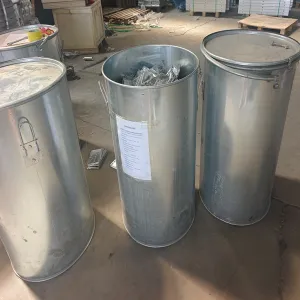
Export packaging method for fixed components such as connectors
Su clasificación: Cable tray connection and fixationVistas: 414Número:Tiempo de liberación: 2026-06-07 18:42:54The cable tray connection and fixing system is the core support system of the entire cable laying project. It is not just a simple splicing and installation of accessories, but also a key structure to ensure the safe, stable, and long-term operation of electromechanical circuits. Through standardized and systematic docking and fastening processes, various hidden dangers in the process of bridge laying can be solved from multiple dimensions such as structural stability, line protection, construction specifications, and operation and maintenance safety. It is an indispensable supporting system f...
Noticias
Categoría:
¡Sin resultados de búsqueda!
Caso
Categoría:
¡Sin resultados de búsqueda!
Video
Categoría:
¡Sin resultados de búsqueda!
Descargar
Categoría:
¡Sin resultados de búsqueda!
Reclutamiento
Categoría:
¡Sin resultados de búsqueda!
Productos recomendados
¡Sin resultados de búsqueda!



 Teléfono