
 English
 한국어
한국어 العربية
 ไทย
ไทย
Horizontal cable tray
A horizontal cable tray is a support system used to route and protect electrical and communication cables along a horizontal plane within buildings and industrial facilities. It provides a structured pathway for power, control, data, and instrumentation cables, helping to keep installations organized, accessible, and safe. By lifting cables off the floor and away from mechanical damage, the tray improves reliability and simplifies inspections and maintenance.Typically, a horizontal cable tray is installed above suspended ceilings, below raised floors, or along walls and structural beams. It is commonly fabricated from steel, aluminum, or fiberglass-reinforced plastic. The choice of material depends on factors such as load capacity, corrosion resistance, environmental conditions, and weight limitations. For example, aluminum offers good strength with relatively low weight, while fiberglass systems are preferred in highly corrosive or chemically aggressive environments.Horizontal cable trays are available in several designs, including ladder-type, perforated, and solid-bottom configurations. Ladder-type trays have side rails connected by transverse rungs, offering excellent ventilation and allowing heat from power cables to dissipate. Perforated trays feature a bottom with regular openings, providing both support and some degree of airflow. Solid-bottom trays offer maximum protection from falling debris and are useful where electromagnetic interference shielding or additional mechanical protection is desired.One of the main advantages of using horizontal cable trays is the ease of cable installation and modification. Cables can be laid directly into the tray without pulling through conduits, which reduces installation time and labor. When system upgrades or expansions are needed, additional cables can be added along the existing tray route with minimal disruption. This flexibility makes cable trays especially suitable for facilities where frequent changes in cabling are expected, such as data centers, manufacturing plants, and commercial buildings.Proper design and installation are critical to the performance of a horizontal cable tray system. Engineers must consider cable loads, support spacing, bending radii, and separation of power and communication circuits. Supports, such as hangers or brackets, are typically spaced at regular intervals to prevent sagging and ensure structural integrity. Accessories like bends, tees, reducers, and drop-outs allow the system to follow the building layout and connect to vertical risers or equipment entry points.Safety and compliance with relevant electrical and building codes are also essential. Correct grounding and bonding of metallic trays help maintain electrical continuity and reduce the risk of shock and electromagnetic interference. Fire performance of cables and tray materials must be evaluated, and in some applications, fire barriers or covers may be necessary. Routine inspection, cleaning, and tightening of hardware help maintain the system over its service life.Overall, a horizontal cable tray system offers an efficient, scalable, and cost-effective method for managing complex cable networks in a wide range of environments.
Producto
Categoría:
Cable tray support arm
-
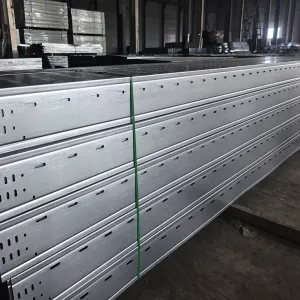
Types of porous cable trays
Su clasificación: Porous cable trayVistas: 191Número:Tiempo de liberación: 2026-06-06 18:53:57The types of porous cable trays on the market are clearly classified according to structural styles, sheet materials, punching processes, and usage scenarios. Different types have different performance advantages and applicable working conditions, which can accurately match the differentiated needs of various strong and weak electrical wiring and intelligent engineering. This facilitates construction parties to select materials according to their needs and carry out precise construction, avoiding engineering problems caused by selection deviations.According to the overall structural form, poro... -
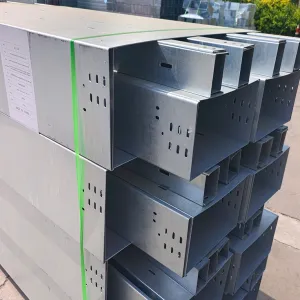
Characteristics of corrosion-resistant and heavily anti-corrosion bridge frame
Su clasificación: Corrosion resistant and heavily anti-corrosion bridge frameVistas: 175Número:Tiempo de liberación: 2026-06-07 16:38:06Corrosion resistant heavy-duty anti-corrosion cable tray is a specialized wiring profile developed specifically for extreme industrial corrosive environments. It breaks through the limitations of ordinary cable tray anti-corrosion performance and is created through a special substrate combined with multiple protective processes. It has strong environmental adaptability and long-term stability, and is specifically designed to solve the industry pain points of easy corrosion, damage, and short service life of bridge trays in chemical, sewage, electroplating, metallurgy and other scenarios. It is...
Noticias
Categoría:
-
[Company News]The flame retardant effect of fire-resistant cable trays
2026-06-05 16:32:59
Caso
Categoría:
¡Sin resultados de búsqueda!
Video
Categoría:
¡Sin resultados de búsqueda!
Descargar
Categoría:
¡Sin resultados de búsqueda!
Reclutamiento
Categoría:
¡Sin resultados de búsqueda!
Productos recomendados
¡Sin resultados de búsqueda!



 Teléfono