
 English
 한국어
한국어 العربية
 ไทย
ไทย
Solid cable tray
A solid cable tray is a fully enclosed metal support system designed to carry and protect electrical and communication cables in industrial, commercial, and infrastructure projects. Unlike perforated or ladder-type trays, solid cable trays have a continuous bottom without holes, providing a smooth, unbroken surface under the cables. This design offers excellent mechanical protection and containment, especially in environments where dust, falling debris, or liquids may be present.These trays are typically manufactured from steel, stainless steel, or aluminum, and may be supplied with different surface finishes such as hot-dip galvanizing, powder coating, or anodizing to improve corrosion resistance. The choice of material and finish depends on the installation environment, including indoor, outdoor, coastal, or chemically aggressive locations. Solid cable trays are supplied in straight lengths and used together with matching fittings such as bends, tees, reducers, and risers to form a continuous pathway.The main function of a solid cable tray is to support and route power cables, control cables, instrumentation cables, and data cables in an organized manner. By keeping cables neatly arranged and physically protected, the system reduces the risk of mechanical damage, accidental disconnection, and interference with other building services. It also facilitates future expansion, allowing additional cables to be installed or existing circuits to be modified without major structural changes.One of the advantages of a solid-bottom design is improved protection against electromagnetic interference when used in combination with appropriate bonding and grounding practices. The continuous metallic surface can help reduce the impact of external electrical noise on sensitive signal and communication cables. The enclosed bottom also prevents small objects, dust, or liquids from reaching the cables from below, making it suitable for certain clean, hazardous, or process-critical areas.However, the absence of ventilation holes means that heat dissipation is more limited than with ladder or perforated trays. When using solid cable trays, designers must carefully consider cable current ratings, grouping factors, and ambient temperature to avoid overheating. Adequate spacing, load calculation, and adherence to relevant electrical standards and installation codes are essential.Installation of solid cable trays typically involves support systems such as wall brackets, ceiling hangers, or floor-mounted stands. Proper spacing of supports is important to control deflection and maintain structural integrity under the weight of cables. Covers may be added to provide additional protection against dust, moisture, or mechanical impact and to meet specific fire or safety requirements.Overall, solid cable trays offer robust, continuous support and a high level of protection for cable installations where cleanliness, shielding, and containment are priorities, and where controlled routing and long-term reliability are required.
Producto
Categoría:
Material-Specific Tray
-
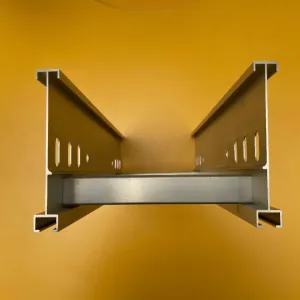
Aluminum alloy cable tray specifications
Su clasificación: Aluminum alloy cable trayVistas: 135Número:Tiempo de liberación: 2026-06-07 15:58:07Aluminum alloy cable trays have a complete and standardized national standard selection system, all of which are extruded from industrial aluminum profiles. The structure is precise and the size standard is different from the processing specification logic of steel cable trays. With lightweight and high-strength structural design, an exclusive standardized specification matrix is formed, which is suitable for standardized selection and construction of various high-end civil buildings, outdoor power engineering, new energy and municipal electromechanical projects.The standard size specification... -
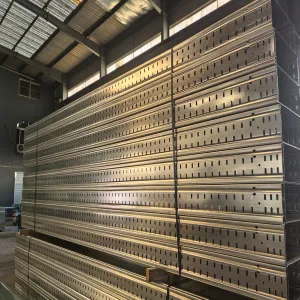
Non standard customized cable tray processing
Su clasificación: Non standard customized cable trayVistas: 175Número:Tiempo de liberación: 2026-06-07 18:08:58Non standard customized cable tray processing is a refined customized production service for various special engineering requirements. Unlike the standard tray assembly line production mode, it relies on customized precision processes to solve engineering problems such as special shapes, structures, and installation processes that cannot be adapted to conventional finished cable trays. Personalized processing and production are carried out throughout the process, adapting to various differentiated engineering projects such as building renovation, industrial upgrading, special equipment matchin...
Noticias
Categoría:
-
[industry news]The manufacturer explained the function of the cable tray
2026-06-05 16:23:46
Caso
Categoría:
Cable Tray Cases
¡Sin resultados de búsqueda!
Video
Categoría:
¡Sin resultados de búsqueda!
Descargar
Categoría:
¡Sin resultados de búsqueda!
Reclutamiento
Categoría:
¡Sin resultados de búsqueda!
Productos recomendados
¡Sin resultados de búsqueda!



 Teléfono